Many property managers assume drain blockages affect only residential buildings, but commercial systems face distinct challenges requiring specialist intervention. Commercial drain unblocking addresses complex obstructions in business drainage networks through professional techniques unavailable to typical homeowners. This guide explains what commercial drain unblocking involves, explores effective clearing methods, identifies common blockage causes, and provides practical prevention strategies tailored for Portsmouth properties. Understanding these fundamentals helps you maintain functional drainage systems and avoid costly emergency repairs.
Table of Contents
- What Is Commercial Drain Unblocking And Why Is It Important?
- Techniques And Tools Used In Commercial Drain Unblocking
- Common Causes Of Blockages In Commercial Drains
- Tips For Preventing Commercial Drain Blockages In Portsmouth
- Find Expert Commercial Drain Unblocking Services In Portsmouth
- Frequently Asked Questions
Key takeaways
| Point | Details |
|---|---|
| Commercial drain unblocking differs from domestic | Business drainage systems require specialised equipment and expertise to handle larger volumes and complex blockages |
| Professional methods ensure thorough clearing | Techniques like drain jetting and CCTV surveys remove stubborn obstructions whilst identifying underlying issues |
| Prevention reduces emergency costs | Regular maintenance and proper waste disposal practices minimise blockage risks and extend drainage system lifespan |
| Early detection prevents major damage | Prompt professional assessment stops minor blockages escalating into flooding or structural damage |
What is commercial drain unblocking and why is it important?
Commercial drain unblocking refers to professional services that clear blockages in business drainage systems using specialised techniques and equipment. Unlike domestic drainage, commercial systems handle substantially higher volumes of wastewater, grease, and debris from restaurants, hotels, retail premises, and industrial facilities. These systems require expert intervention because 30% of blockages resist conventional cleaners, making DIY approaches ineffective and potentially damaging.
Commercial drains face unique challenges that distinguish them from residential systems. Fat and grease accumulation from food service establishments creates stubborn deposits that solidify within pipes. Tree roots infiltrate underground drainage networks seeking moisture, causing severe structural damage. Foreign objects like sanitary products, wet wipes, and packaging materials lodge in pipes, creating immediate obstructions. Scale buildup from hard water gradually narrows pipe diameter, restricting flow capacity.
Ignoring commercial drain blockages triggers serious consequences for Portsmouth businesses. Standing water creates health hazards by breeding bacteria and attracting pests. Flooding damages stock, equipment, and interior finishes, leading to insurance claims and business interruption. Slow drainage frustrates customers and staff, harming your reputation. Persistent blockages cause pipe corrosion and joint failure, necessitating expensive excavation and replacement. Understanding drain unblocking explained helps you recognise when professional intervention becomes essential.
Licensed drainage specialists perform commercial drain unblocking using advanced diagnostic and clearing equipment. Initial assessment involves CCTV camera inspection to locate blockages and identify underlying causes. Technicians then select appropriate clearing methods based on blockage type, pipe material, and system configuration. Post-clearance inspection confirms complete obstruction removal and reveals any structural issues requiring attention.
Typical commercial drain unblocking involves these key elements:
- Comprehensive site assessment and drainage system mapping
- CCTV survey to pinpoint blockage location and severity
- Selection of appropriate clearing technique matched to obstruction type
- Thorough cleaning to remove all debris and residue
- Final inspection to verify complete clearance and system integrity
- Detailed reporting with recommendations for preventative maintenance
Techniques and tools used in commercial drain unblocking
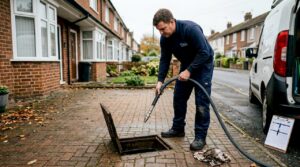
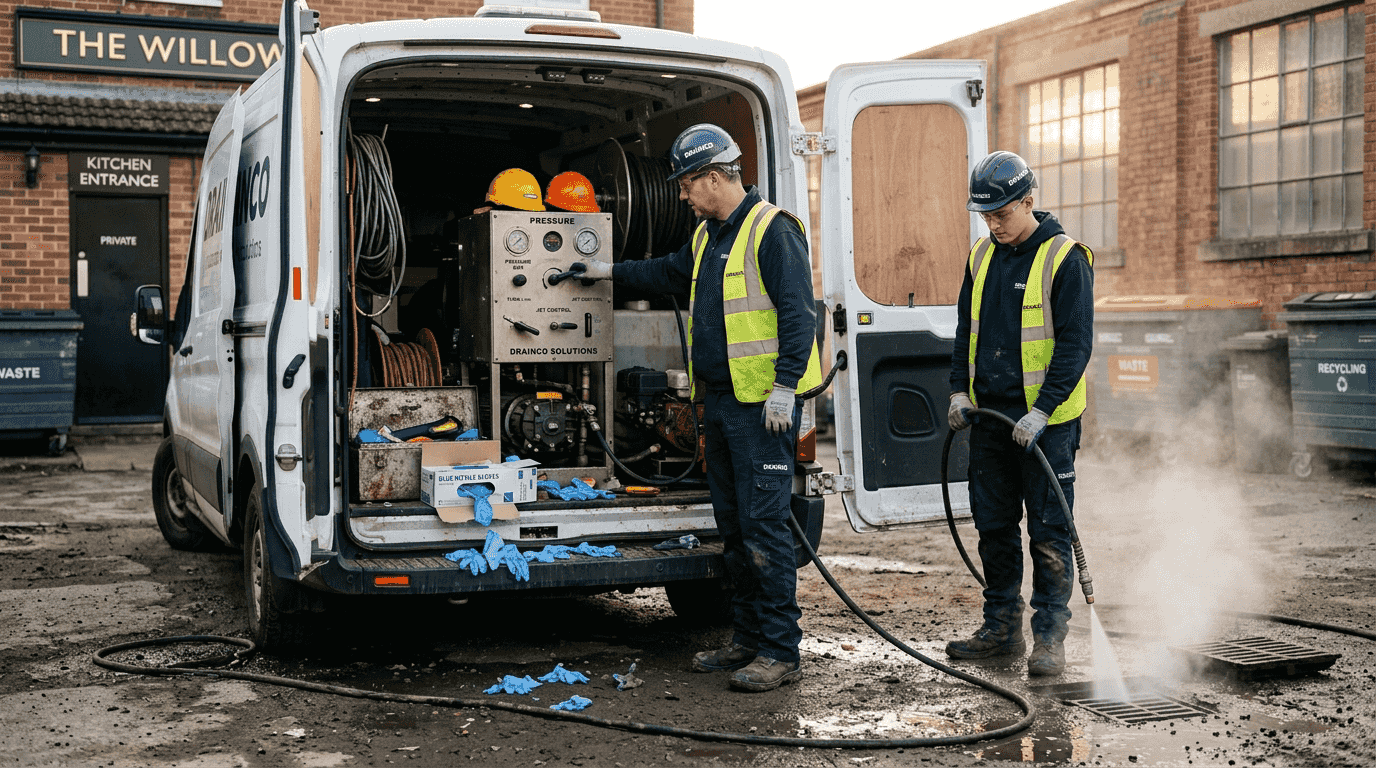
Professional drainage companies employ sophisticated methods to clear commercial blockages effectively. High-pressure water jetting stands as the most versatile technique, using focused water streams at pressures exceeding 3,000 PSI to obliterate grease, scale, and debris. Drain jetting removes stubborn blockages safely whilst flushing residue completely from pipe walls. Mechanical rodding uses flexible steel cables with cutting heads to break through solid obstructions like compacted waste and root masses.
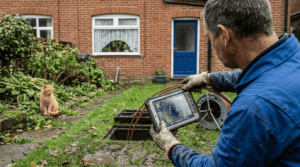
CCTV drainage surveys provide crucial diagnostic capabilities before and after clearing work. Waterproof cameras mounted on flexible cables navigate through pipes, transmitting real-time footage to surface monitors. Technicians identify blockage composition, assess structural damage, and locate collapsed sections without excavation. This technology prevents unnecessary pipe damage from blind clearing attempts and documents system condition for maintenance planning.
Pro Tip: Always request a CCTV survey before aggressive clearing methods. Visual confirmation of blockage type and location prevents pipe damage from inappropriate techniques and reveals hidden structural issues requiring repair.
Different commercial unblocking methods suit specific situations and blockage types:
| Method | Best For | Advantages | Limitations |
|---|---|---|---|
| High-pressure jetting | Grease, scale, general debris | Thorough cleaning, environmentally safe, fast | Requires water access, unsuitable for fragile pipes |
| Mechanical rodding | Solid obstructions, root masses | Effective on tough blockages, works in confined spaces | Risk of pipe damage, incomplete debris removal |
| Chemical treatments | Organic matter, minor grease buildup | Simple application, preventative use | Environmental concerns, ineffective on solid objects |
| Electro-mechanical cleaning | Heavy scale, mineral deposits | Precision cutting, minimal pipe stress | Specialised equipment needed, higher cost |
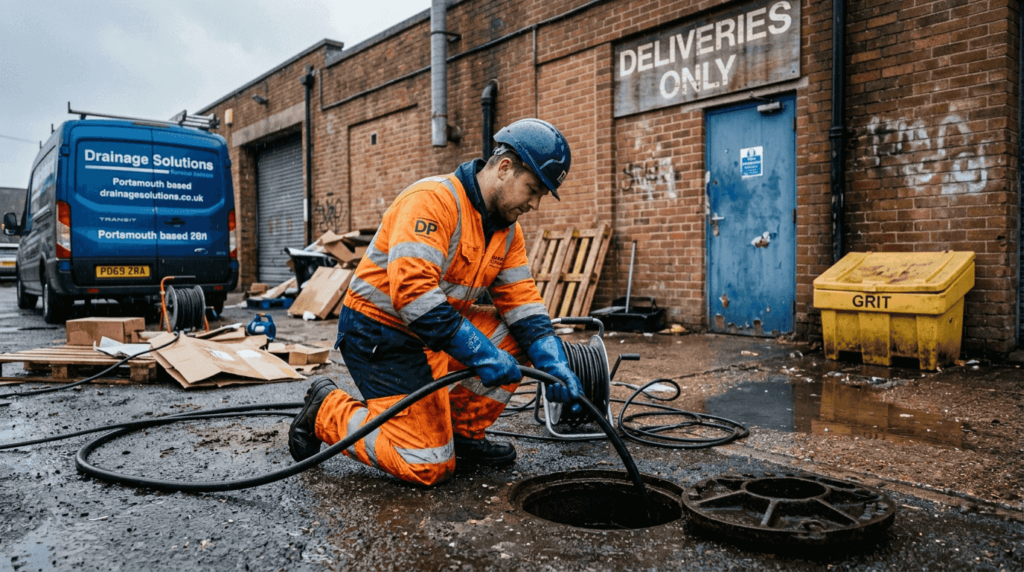
Safety considerations govern professional drain unblocking operations. Technicians wear protective equipment including gloves, eye protection, and waterproof clothing to prevent contamination exposure. Confined space protocols apply when accessing manholes or underground chambers. High-pressure equipment requires certified operators to prevent injury from water jet recoil or hose failure. Proper waste disposal follows environmental regulations, with contaminated water and debris transported to licensed treatment facilities.
Environmental impact receives careful attention during commercial drain clearing. Water jetting produces no harmful emissions or chemical residues, making it the most sustainable option. Recovered waste undergoes proper treatment rather than discharge into watercourses. Modern commercial drain solutions incorporate eco-friendly practices that protect Portsmouth’s water quality whilst maintaining drainage system functionality.
Common causes of blockages in commercial drains
Commercial drainage systems encounter specific blockage sources linked to business activities. Understanding these causes helps Portsmouth property managers implement targeted prevention strategies:
-
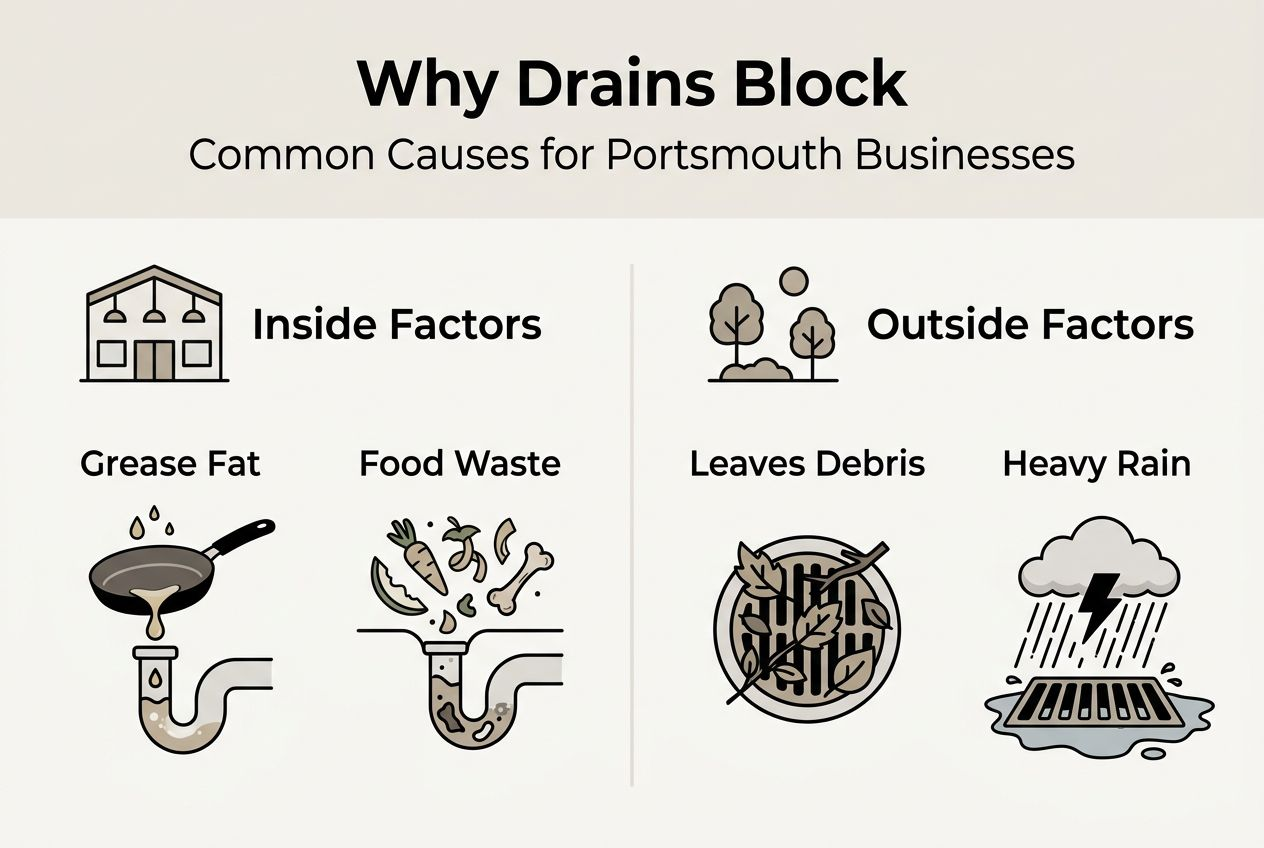
Fat, oil, and grease accumulation from food preparation facilities creates the most persistent commercial blockages. Liquid fats cool and solidify within pipes, trapping other debris and gradually restricting flow. Restaurant kitchens, hotel catering areas, and food processing plants generate substantial grease volumes that overwhelm drainage capacity without proper management.
-
Foreign object disposal causes immediate obstructions when staff or customers flush inappropriate items. Sanitary products, wet wipes, paper towels, and packaging materials fail to break down in water, lodging at pipe bends and junctions. Retail premises and public facilities face particular risk from improper waste disposal habits.
-
Tree root infiltration affects older commercial properties with clay or concrete drainage pipes. Roots exploit tiny cracks and joint gaps, expanding inside pipes as they seek moisture and nutrients. Mature trees near buildings pose ongoing threats to underground drainage networks, requiring regular monitoring and maintenance.
-
Scale and mineral deposits build gradually in areas with hard water, narrowing pipe diameter over time. Commercial premises using substantial water volumes accelerate scale formation, particularly in heating systems and industrial processes. This gradual restriction often goes unnoticed until flow capacity drops significantly.
-
Structural damage from ground movement, heavy vehicle traffic, or age-related deterioration creates collapse points where debris accumulates. Commercial sites with frequent deliveries or construction activity experience increased pipe stress, whilst older systems suffer from corroded joints and fractured sections.
Commercial activities contribute uniquely to drainage problems through concentrated waste generation. Restaurants produce daily grease volumes far exceeding residential properties. Hair salons generate substantial hair and chemical residue. Manufacturing facilities discharge process water containing suspended solids. Each business type creates specific drainage challenges requiring tailored management approaches. Commercial drainage systems must accommodate these varied waste streams through proper design and maintenance.
Seasonal and weather factors influence blockage frequency in Portsmouth properties. Autumn leaf fall clogs external gullies and surface drains, whilst winter freezing can crack pipes and dislodge joints. Heavy rainfall overwhelms inadequate drainage capacity, causing backup into buildings. Spring growth accelerates root intrusion as trees emerge from dormancy. Understanding these patterns helps you schedule preventative maintenance before peak risk periods.
Early detection prevents minor issues escalating into major failures. Warning signs include slow drainage, gurgling sounds, unpleasant odours, and localised damp patches. Regular professional inspections identify developing problems before they cause business disruption or property damage.
Tips for preventing commercial drain blockages in Portsmouth
Proactive maintenance strategies significantly reduce blockage frequency and associated costs for commercial properties. Implementing these practical measures protects your drainage investment whilst minimising emergency service requirements.
Scheduled drain inspections catch developing problems before they cause disruption. Annual CCTV surveys reveal early-stage blockages, structural weaknesses, and root infiltration requiring attention. High-risk premises like restaurants benefit from quarterly inspections to monitor grease accumulation and verify control measures remain effective. Regular drain cleaning benefits include extended system lifespan, reduced emergency callouts, and lower overall maintenance costs.
Proper waste disposal practices form your primary defence against commercial blockages. Staff training ensures everyone understands what can and cannot enter drainage systems. Clear signage in toilets and kitchens reinforces correct disposal habits. Dedicated waste bins for sanitary products, food scraps, and packaging prevent inappropriate flushing. Regular audits identify compliance gaps requiring additional education or facility modifications.
Specialised equipment manages high-risk waste streams effectively:
- Grease traps intercept fats and oils before they enter main drainage systems, requiring regular emptying and cleaning
- Commercial filters capture hair, food particles, and debris at source points like sinks and floor drains
- Automatic dosing systems introduce biological treatments that break down organic matter within pipes
- Backflow preventers stop contaminated water reversing into clean water supplies during blockage events
Pro Tip: Coordinate with licensed drainage specialists to develop a tailored maintenance programme matching your specific business activities and risk profile. Professional guidance ensures you invest in appropriate prevention measures rather than unnecessary services.
Temperature management prevents grease solidification within drainage pipes. Hot water flushes after food preparation help transport fats through systems before cooling occurs. Some facilities install heated waste pipes in critical areas to maintain flow. However, hot water alone cannot substitute for proper grease trap maintenance and disposal controls.
Landscaping decisions impact long-term drainage health around commercial properties. Avoid planting large trees near underground pipes, or install root barriers during construction. Regular tree maintenance including root pruning reduces infiltration risk. Surface drainage improvements divert rainwater away from building foundations, protecting underground pipe networks from water damage and ground movement.
Documentation supports effective prevention programmes. Maintain records of all inspections, cleaning sessions, and repairs to identify recurring problems and track system performance over time. This information proves invaluable when planning upgrades or diagnosing complex drainage issues.
Find expert commercial drain unblocking services in Portsmouth
When drainage problems exceed your prevention efforts, professional intervention restores system functionality quickly and safely. Portsmouth businesses benefit from local specialists who understand regional drainage challenges and provide rapid emergency response. Expert assessment identifies root causes rather than merely treating symptoms, preventing repeated blockages and unnecessary costs.
Comprehensive commercial drain solutions maintenance programmes combine routine inspections with prompt problem resolution, keeping your systems operating reliably year-round. Emergency situations require immediate attention to prevent business disruption and property damage. Understanding emergency drain unblocking steps helps you respond effectively whilst awaiting professional assistance.
Tailored service plans address your specific drainage requirements based on property type, business activities, and system configuration. Professional drainage specialists provide transparent pricing, detailed reporting, and guaranteed workmanship. Visit blocked drains portsmouth to connect with experienced technicians who deliver effective solutions for commercial drainage challenges.
Frequently asked questions
What exactly does commercial drain unblocking involve?
Commercial drain unblocking uses professional equipment like high-pressure water jets and CCTV cameras to clear blockages from business drainage systems. Specialists assess the problem, select appropriate clearing methods, remove obstructions completely, and verify system functionality through post-clearance inspection.
How do I know if my commercial drains are blocked?
Warning signs include slow drainage from sinks and toilets, gurgling sounds when water flows, unpleasant sewage odours, and water backing up through floor drains. Multiple fixtures draining slowly simultaneously indicates a main drain blockage requiring professional attention.
What methods do professionals use to detect blockages?
CCTV drainage surveys provide the most accurate blockage detection, using waterproof cameras to inspect pipe interiors and pinpoint obstruction locations. Technicians also use acoustic sensors to detect flow restrictions and thermal imaging to identify pipe damage or leaks.
When should I call drainage specialists instead of attempting DIY clearing?
Contact professionals immediately if multiple drains block simultaneously, water backs up into buildings, you detect sewage odours, or DIY methods fail to restore normal drainage. Commercial systems require specialised equipment and expertise that household tools cannot provide safely or effectively.
Can I prevent commercial drain blockages without professional help?
Basic prevention includes proper waste disposal, regular hot water flushing, and staff training on drainage protection. However, professional maintenance including CCTV surveys, high-pressure cleaning, and grease trap servicing provides comprehensive protection that DIY approaches cannot match.
How often should commercial drains receive professional cleaning?
High-risk premises like restaurants need quarterly cleaning, whilst standard commercial properties benefit from annual maintenance. Your specific requirements depend on business type, drainage system age, and historical blockage frequency. Professional assessment determines optimal cleaning schedules.