Types of commercial drainage systems for flood prevention
Flooding poses a severe threat to Portsmouth commercial properties, causing thousands in damage and operational disruption annually. Property managers face the critical challenge of selecting drainage systems that prevent water accumulation whilst meeting stringent local regulations. This guide examines seven commercial drainage system types, comparing performance, costs, and suitability to help you make informed decisions that protect your Portsmouth business from flood risk and ensure compliance.
Table of Contents
- Key Criteria For Selecting Commercial Drainage Systems
- The Seven Main Types Of Commercial Drainage Systems
- Comparison Of Commercial Drainage Systems: Performance, Costs, And Durability
- Regulations And Compliance For Commercial Drainage In Portsmouth
- Maintenance Practices To Ensure Longevity And Performance
- Tailored Recommendations: Choosing The Right Drainage System For Your Property
- Discover Expert Commercial Drainage Solutions In Portsmouth
Key takeaways
| Point | Details |
|---|---|
| Right drainage minimises flood damage | Proper system selection prevents costly water damage and operational shutdowns in Portsmouth properties. |
| Choose based on critical criteria | Material durability, capacity, site conditions, and compliance requirements determine optimal drainage performance. |
| Seven main system types available | Channel drains, soakaways, grease traps, permeable paving, gully pots, French drains, and green roofs each suit specific commercial contexts. |
| Costs and maintenance vary significantly | Concrete systems last 50+ years but cost more initially; plastic options are cheaper but require earlier replacement. |
| Portsmouth regulations mandate compliance | Flood and Water Management Act 2010 and SuDS requirements govern drainage installations across the city. |
Key criteria for selecting commercial drainage systems
Choosing the right drainage system requires evaluating multiple factors that directly impact performance and longevity. Portsmouth’s unique coastal climate and urban density create specific challenges that demand careful assessment.
Material durability determines replacement cycles and long term costs. Concrete systems withstand heavy loads and corrosion for decades, whilst plastic alternatives offer easier installation but shorter lifespans. Your property’s traffic patterns and environmental exposure should guide material selection.
Installation and maintenance costs form a critical balance between upfront investment and ongoing expenses. Material durability, installation cost, maintenance frequency, and compliance requirements are critical factors in selecting effective commercial drainage systems. Budget constraints must account for both immediate expenditure and projected servicing needs over the system’s lifetime.
Flood handling capacity must match Portsmouth’s rainfall patterns and your property’s specific risk profile. Systems should accommodate peak flow rates during storm events without overwhelming drainage networks. Undersized installations lead to water accumulation and potential property damage.
Regulatory compliance protects your business from penalties and environmental liability. Portsmouth mandates Sustainable Drainage Systems for new developments, whilst food service properties require grease traps regardless of building age. Non compliance risks fines and increased flood damage exposure.
Site specific factors significantly influence system suitability:
- Soil permeability affects subsurface drainage options like soakaways
- Available space constrains system footprint and configuration
- Surface type determines runoff volumes and collection methods
- Existing infrastructure may limit installation approaches
Pro Tip: Conduct a professional drainage survey before selecting systems. Soil permeability tests and flow calculations prevent costly mistakes and ensure your chosen solution handles actual site conditions rather than theoretical assumptions.
The seven main types of commercial drainage systems
Commercial properties require diverse drainage solutions matched to their operational needs and physical characteristics. Understanding each system type enables informed selection for Portsmouth’s varied commercial landscape.
Channel drains, also called linear drains, manage surface water runoff across paved areas. These systems excel in urban environments with extensive hard surfaces like car parks and loading bays. Concrete or polymer concrete channels collect water along their length, directing flow to drainage networks whilst resisting vehicle loads.
Soakaways facilitate subsurface water infiltration, allowing runoff to permeate into surrounding soil gradually. These systems require permeable ground conditions and adequate space for underground chambers or rubble filled pits. Portsmouth properties with clay rich soils may find soakaways ineffective due to poor drainage rates.
Grease traps prevent fats, oils, and grease from entering sewer systems, protecting infrastructure from blockages. Channel drains and soakaways manage surface and subsurface water respectively; grease traps are mandatory for food businesses. Restaurants, cafes, and commercial kitchens must install these devices to comply with environmental regulations.
Permeable paving supports sustainable drainage by allowing water to pass through surface materials into subsurface layers. This approach reduces runoff volumes whilst filtering pollutants naturally. Permeable systems suit moderate traffic areas like pedestrian zones and light vehicle access routes.
Gully pots and catch basins manage debris and sediment before water enters drainage pipes. These collection points feature sumps that trap solid materials, preventing downstream blockages. Regular emptying maintains flow capacity and protects drainage networks from contamination.
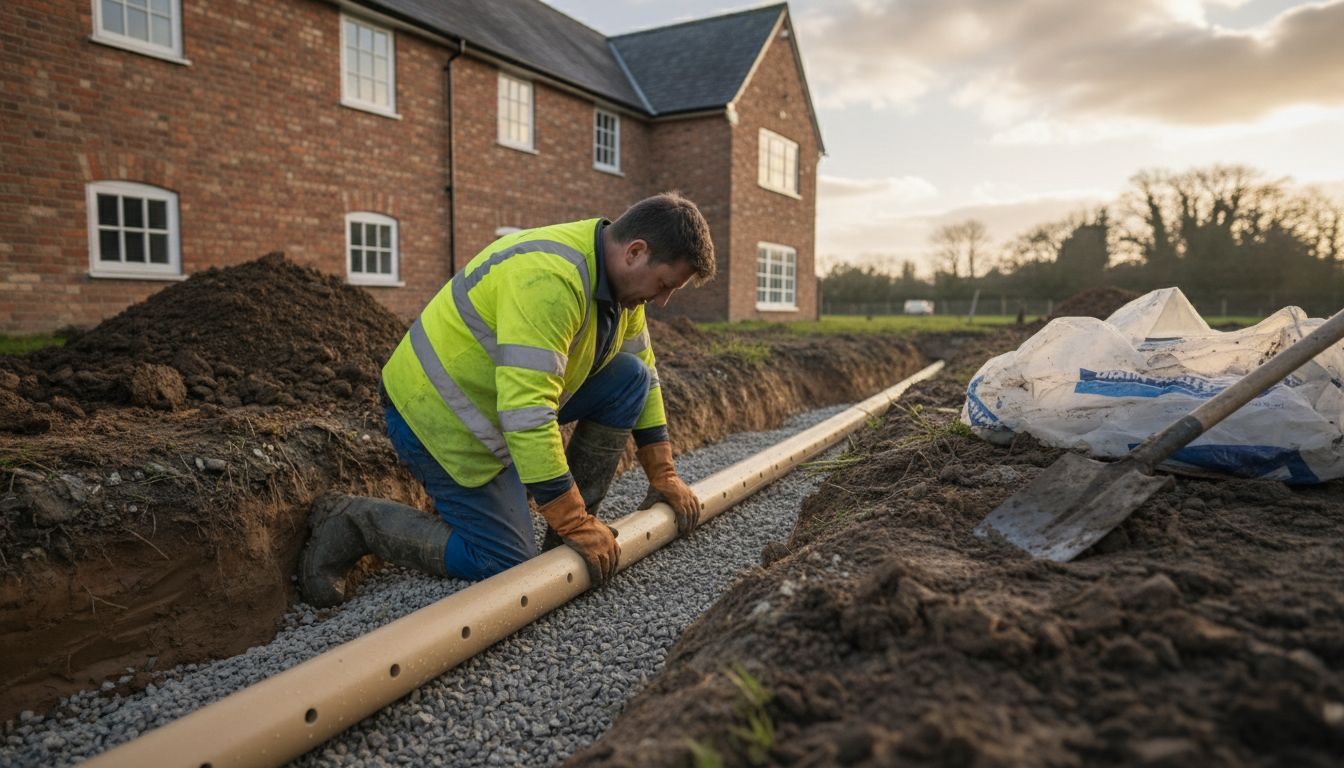
French drains control groundwater and prevent subsurface flooding through perforated pipes surrounded by gravel. These systems redirect water away from building foundations and sensitive areas. Properties experiencing persistent dampness or high water tables benefit from French drain installations.
Green roofs supplement drainage by retaining rainfall on vegetated rooftop surfaces. Whilst not primary drainage solutions, these systems reduce peak runoff rates and provide environmental benefits. Portsmouth commercial developments increasingly incorporate green roofs to meet sustainability targets.
Comparison of commercial drainage systems: performance, costs, and durability
Evaluating drainage systems requires understanding how performance characteristics translate into real world costs and longevity. Concrete and plastic materials dominate channel drain installations, each offering distinct advantages.
| System Type | Lifespan (years) | Installation Cost | Maintenance Frequency | Load Capacity | Soil Requirements |
|---|---|---|---|---|---|
| Concrete channel drains | 50+ | High | Biannual cleaning | Very high (Class F900) | None |
| Plastic channel drains | 25 to 30 | Medium | Biannual cleaning | Medium (Class C250) | None |
| Soakaways | 20 to 25 | Medium | Annual inspection | N/A | High permeability required |
| Grease traps | 15 to 20 | Medium | Monthly pumping | N/A | None |
| Permeable paving | 20 to 25 | High | Quarterly maintenance | Low to medium | Moderate permeability |
Concrete channel drains outperform plastic alternatives in lifespan and load capacity but have higher upfront costs. This makes concrete ideal for high traffic commercial zones where vehicle loads exceed standard specifications. Plastic systems cost 30 to 40% less initially but require replacement roughly twice as frequently.
Soakaways perform effectively where infiltration rates reach 25 to 50mm per hour, but Portsmouth’s variable soil composition limits applicability. Clay dominated areas experience infiltration rates below 10mm per hour, rendering soakaways ineffective. Site testing determines feasibility before investment.
Grease traps demand intensive maintenance but prevent catastrophic sewer blockages. Monthly pumping costs range from £100 to £300 depending on trap size and usage intensity. High volume kitchens may require fortnightly servicing to maintain compliance and prevent overflow.
Permeable paving balances cost and sustainability effectively:
- Reduces surface runoff by 60 to 80% compared to impermeable surfaces
- Installation costs 20 to 50% higher than conventional paving
- Requires quarterly vacuum sweeping to maintain permeability
- Suitable for areas with traffic loads below Class C250
Pro Tip: Calculate total cost of ownership over 25 years rather than comparing installation prices alone. Concrete systems often prove more economical despite higher upfront costs when factoring replacement cycles and maintenance expenses across typical property ownership periods.
Regulations and compliance for commercial drainage in Portsmouth
Legal requirements governing commercial drainage protect public infrastructure and environmental quality whilst reducing flood risk. Portsmouth property managers must navigate national legislation and local planning policies.
The Flood and Water Management Act 2010 establishes drainage planning requirements for new developments and major renovations. This legislation mandates flood risk assessments and sustainable drainage strategies for projects exceeding specific thresholds. Non compliance delays planning approvals and may result in enforcement action.
Sustainable Drainage Systems regulations require new commercial developments to manage runoff at or below pre development rates. The Flood and Water Management Act 2010 and SuDS requirements govern drainage design in Portsmouth, with specific rules for grease traps in food businesses. SuDS approaches prioritise infiltration, attenuation, and water quality treatment over traditional pipe and discharge methods.
Food service businesses face mandatory grease trap installation and maintenance requirements under environmental protection regulations. These rules apply regardless of building age or renovation status. Failure to install compliant grease management systems risks prosecution and unlimited fines for water pollution offences.
Building Regulations Part H addresses drainage and waste disposal for all commercial construction. This framework specifies minimum pipe sizes, gradients, and ventilation requirements. Portsmouth Building Control verifies compliance before issuing completion certificates.
Non compliance consequences extend beyond immediate penalties:
- Fines ranging from £5,000 to unlimited amounts for serious breaches
- Increased liability for flood damage to neighbouring properties
- Insurance policy invalidation due to regulatory violations
- Operational restrictions or closure orders in severe cases
Local planning policies add Portsmouth specific requirements for coastal and flood risk zones. Properties in these areas face enhanced scrutiny during planning applications, requiring detailed drainage strategies and evidence of adequate capacity.
Maintenance practices to ensure longevity and performance
Proactive maintenance preserves drainage system performance and prevents costly emergency repairs. Portsmouth’s coastal environment accelerates wear through salt exposure and increased moisture, making regular servicing essential.
Regular maintenance such as biannual cleaning of channel drains and monthly grease trap servicing prevents blockages and system failures. Establishing maintenance schedules aligned with system types maximises lifespan whilst maintaining compliance.
- Inspect channel drains biannually, clearing sediment and debris accumulation before winter storm periods and after spring pollen season.
- Service grease traps monthly for standard commercial kitchens, increasing frequency to fortnightly for high volume operations exceeding 500 meals daily.
- Test soakaway infiltration rates annually to identify declining performance before complete failure occurs.
- Vacuum sweep permeable paving quarterly to remove fine particles blocking pore spaces and restore infiltration capacity.
- Examine gully pots every six months, emptying sumps when sediment reaches 75% of total depth to maintain flow capacity.
Maintenance schedules should account for Portsmouth’s seasonal patterns. Autumn leaf fall increases debris loads, whilst winter storms test system capacity under peak flow conditions. Pre emptive servicing before high risk periods reduces emergency callout likelihood.
Early warning signs of drainage deterioration include standing water after rainfall, slow drainage rates, and unpleasant odours near grease traps. Addressing these indicators promptly prevents minor issues escalating into system failures requiring expensive emergency repairs.
Pro Tip: Implement digital maintenance logs tracking servicing dates, issues identified, and corrective actions taken. These records demonstrate regulatory compliance during inspections whilst identifying recurring problems that may indicate underlying design inadequacies requiring system upgrades.
Tailored recommendations: choosing the right drainage system for your property
Matching drainage systems to specific Portsmouth commercial contexts optimises performance whilst controlling costs. Property type, operational requirements, and site characteristics determine ideal solutions.
Concrete channel drains suit paved urban commercial properties experiencing high surface runoff and vehicle traffic. Urban commercial properties benefit from concrete channel drains for heavy runoff, whilst food businesses require grease traps with regular servicing. Retail parks, distribution centres, and industrial estates benefit from concrete’s superior load resistance and longevity.
Food service businesses must prioritise grease trap installations regardless of other drainage infrastructure. Regulatory compliance demands monthly professional servicing to prevent sewer contamination. Undersizing traps to reduce costs creates frequent blockages and potential prosecution for environmental violations.
Soakaways provide cost effective solutions for properties with permeable soil and available land area. These systems work well for office complexes and business parks with landscaped grounds. Portsmouth sites with clay soils require alternative approaches due to poor infiltration characteristics.
Permeable paving supports corporate sustainability commitments whilst managing runoff effectively:
- Ideal for new commercial developments seeking BREEAM certification
- Suitable for car parks with light to moderate traffic volumes
- Reduces connection fees to public sewers through lower discharge rates
- Provides natural filtration improving water quality
Green roofs complement primary drainage systems on flat roofed commercial buildings. These installations retain 40 to 80% of annual rainfall, reducing peak discharge rates. Portsmouth’s temperate climate supports year round vegetation growth, maximising retention benefits.
| Property Type | Primary System | Secondary System | Key Considerations |
|---|---|---|---|
| Restaurants and cafes | Grease trap | Channel drains | Monthly grease trap servicing mandatory |
| Retail parks | Concrete channel drains | Gully pots | High vehicle loads require Class F900 rated systems |
| Office complexes | Permeable paving | Soakaways | Soil permeability testing essential before soakaway installation |
| Industrial estates | Concrete channel drains | French drains | Groundwater control prevents foundation damage |
| Modern developments | Permeable paving | Green roofs | Meets SuDS requirements and sustainability targets |
Combining complementary systems creates resilient drainage infrastructure managing multiple water sources effectively. Channel drains handle surface runoff whilst French drains control subsurface moisture, protecting buildings comprehensively.
Discover expert commercial drainage solutions in Portsmouth
Selecting and maintaining commercial drainage systems demands specialist knowledge of Portsmouth’s regulatory environment and local conditions. Professional drainage services ensure your property benefits from correctly specified, compliant installations that protect against flood damage.
Expert drainage specialists assess your property’s unique requirements, recommending systems tailored to operational needs and site constraints. Professional installation guarantees compliance with Building Regulations and SuDS requirements, avoiding costly rectification work. When drainage emergencies occur, rapid response prevents extended business disruption.
Ongoing maintenance programmes delivered by qualified drainage specialists extend system lifespan whilst maintaining peak performance. Regular servicing identifies developing issues before failures occur, reducing total ownership costs. Contact trusted Portsmouth commercial drainage services to protect your property investment and ensure regulatory compliance.
Frequently asked questions
What is the most common drainage system for commercial properties in Portsmouth?
Channel drains, particularly concrete types, dominate Portsmouth commercial installations due to exceptional durability and surface water handling capacity. These systems suit the city’s urban paved environments prevalent across retail, industrial, and commercial districts.
How often should commercial grease traps be maintained?
Grease traps require monthly professional cleaning to comply with environmental regulations and prevent blockages. High volume commercial kitchens serving over 500 meals daily should increase servicing frequency to fortnightly intervals.
Are soakaways suitable for all Portsmouth commercial properties?
Soakaways demand permeable soil and adequate land area, which many Portsmouth urban sites lack. Clay rich soils common across the city prevent effective infiltration, making soakaways unsuitable without comprehensive permeability testing confirming adequate drainage rates above 25mm per hour.
What regulations must commercial drainage systems in Portsmouth follow?
Commercial drainage must comply with the Flood and Water Management Act 2010, local SuDS requirements for new developments, and Building Regulations Part H. Food service businesses face additional mandatory grease trap installation and maintenance rules under environmental protection legislation.