Water damage accounts for billions in property losses annually, with exterior drainage failures as a leading contributor. For Portsmouth businesses, poor drainage isn’t just an inconvenience, it’s a financial threat that can halt operations, damage inventory, and compromise structural integrity. Many property managers assume flooding only affects coastal areas during storms, yet inadequate drainage systems cause year-round issues even during moderate rainfall. This guide explores practical drainage solutions tailored to Portsmouth’s commercial properties, from selecting the right system type to maintaining compliance with UK regulations, helping you protect your investment and ensure uninterrupted business operations.
Table of Contents
- Understanding Commercial Drainage Challenges
- Popular Commercial Drainage Solutions And Their Features
- Comparing Above-Ground And Below-Ground Drainage Systems
- Uk Regulations And Maintenance Essentials For Commercial Drainage
- Protect Your Portsmouth Business With Expert Drainage Services
- Frequently Asked Questions
Key takeaways
| Point | Details |
|---|---|
| Prevention saves money | Effective drainage prevents costly water damage and structural issues that can shut down operations |
| System variety matters | Different drainage systems suit different building types, roof configurations, and Portsmouth’s climate |
| Compliance is mandatory | Maintenance and adherence to UK regulations ensure optimal system performance and legal compliance |
| Professional expertise | Local drainage specialists understand Portsmouth-specific challenges and deliver tailored solutions |
Understanding commercial drainage challenges
Commercial properties face drainage complexities far beyond residential needs. Portsmouth businesses contend with large roof areas, extensive car parks, and heavy foot traffic that all generate substantial water volumes requiring efficient removal. Unlike domestic settings, commercial sites demand systems engineered for scale, handling everything from daily rainfall to sudden downpours that can overwhelm inadequate infrastructure.
Soil composition plays a critical role in drainage effectiveness. Portsmouth’s varied geology means some areas have clay-heavy soils that drain poorly, whilst others feature sandy compositions allowing faster water absorption. A drainage system working perfectly in one location may fail catastrophically just streets away. Exterior drainage depends on soil type, foundation design, water volume, and natural flow pathways, making cookie-cutter solutions a recipe for disaster.
Many property managers fall victim to the misconception that one drainage system fits all commercial needs. This thinking leads to recurring blockages, flooding, and expensive emergency repairs. Your building’s age, roof type, surrounding landscape, and even neighbouring properties influence which drainage approach delivers reliable performance. Understanding these variables before installation saves substantial money and headaches down the line.
Common challenges include:
- Undersized systems unable to handle peak water volumes
- Tree roots infiltrating underground pipes causing blockages
- Debris accumulation in gutters and surface drains
- Inadequate slope preventing proper water flow
- Poor connection points between different drainage components
Pro Tip: Schedule drainage assessments during heavy rainfall to identify weak points under real-world conditions rather than relying solely on dry-weather inspections.
“Commercial drainage isn’t about managing occasional puddles, it’s about protecting your entire property investment from water’s destructive force whilst maintaining business continuity regardless of weather conditions.”
Exploring commercial drainage systems types reveals options suited to Portsmouth’s specific requirements, from traditional methods to innovative technologies.
Popular commercial drainage solutions and their features
Flat roof drainage dominates Portsmouth’s commercial landscape, particularly for retail units, warehouses, and office blocks. These systems rely on built-in slopes that guide water toward internal drains or scuppers positioned at roof edges. The slope, typically just 1:60, seems minimal but proves essential for preventing water pooling that leads to leaks and structural stress. Internal drains connect to vertical pipes running through the building, whilst scuppers discharge water through parapet walls into external downpipes.
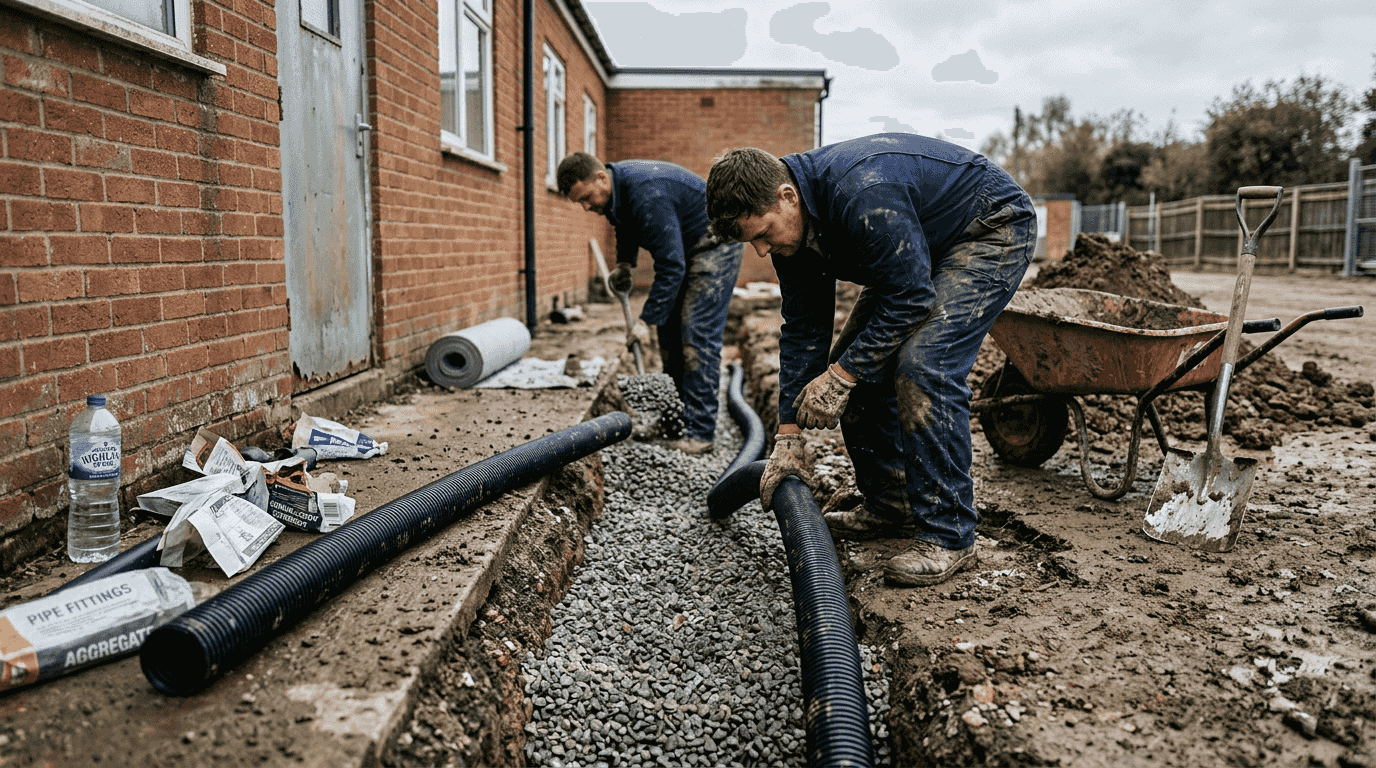
French drains offer elegant solutions for managing ground water around building perimeters. These trenches filled with gravel and perforated pipes intercept surface runoff before it reaches foundations, redirecting water to safe discharge points. Portsmouth properties with basement spaces or ground-floor retail units particularly benefit from French drains, which create a protective barrier against water infiltration. Installation requires careful grading to ensure gravity-fed flow, but once established, these systems operate reliably with minimal intervention.
Siphonic systems create vacuum effects enabling rapid drainage from large roof areas using smaller diameter pipes than traditional gravity systems. When rainfall fills the siphonic drain, air gets expelled, creating negative pressure that pulls water at high velocity through the pipework. This technology suits Portsmouth’s larger commercial buildings, shopping centres, and industrial facilities where conventional drainage would require bulky, expensive pipe networks. The initial installation costs more, but reduced pipe sizes and faster water removal often justify the investment.
| System Type | Best For | Key Advantage | Maintenance Need |
|---|---|---|---|
| Flat roof drains | Retail, offices, warehouses | Proven reliability | Moderate, quarterly checks |
| French drains | Perimeter protection | Ground water control | Low, annual inspection |
| Siphonic systems | Large roof areas | Rapid water removal | Higher, specialist servicing |
| Channel drains | Car parks, loading bays | Surface water collection | Moderate, debris clearing |
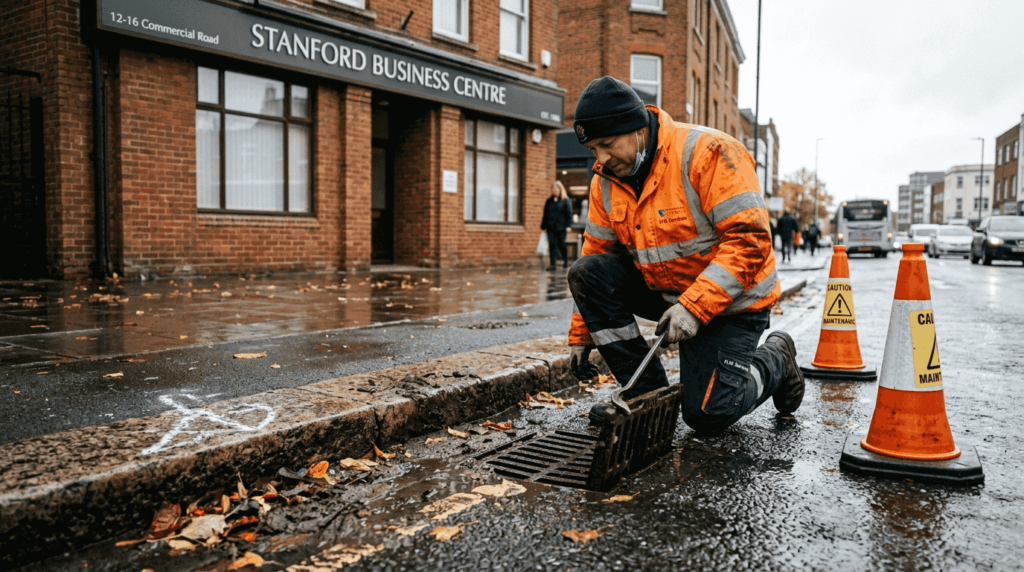
Channel drains excel in car parks and loading bays where surface water accumulates quickly. These linear drainage systems feature grated channels that capture runoff across wide areas, funnelling it to collection points. Portsmouth businesses with significant paved areas rely on channel drains to prevent flooding during heavy rainfall, protecting both property and customer safety.
Pro Tip: Combine multiple drainage types for comprehensive protection, using French drains for perimeter defence whilst channel drains handle surface water and roof systems manage overhead runoff.
Selecting appropriate systems requires analysing your building’s specific characteristics, roof configuration, surrounding landscape, and operational requirements. Effective commercial drain solutions balance installation costs against long-term performance and maintenance demands.
Comparing above-ground and below-ground drainage systems
Above-ground drainage systems offer compelling advantages for Portsmouth businesses prioritising accessibility and maintenance efficiency. These visible pipe networks allow rapid fault detection compared to buried alternatives, with leaks, blockages, and damage immediately apparent during routine inspections. Installation costs remain lower because excavation work gets eliminated, and repairs happen faster with minimal disruption to business operations. Maintenance teams appreciate the straightforward access, completing inspections and cleaning without specialist equipment or extensive site disturbance.
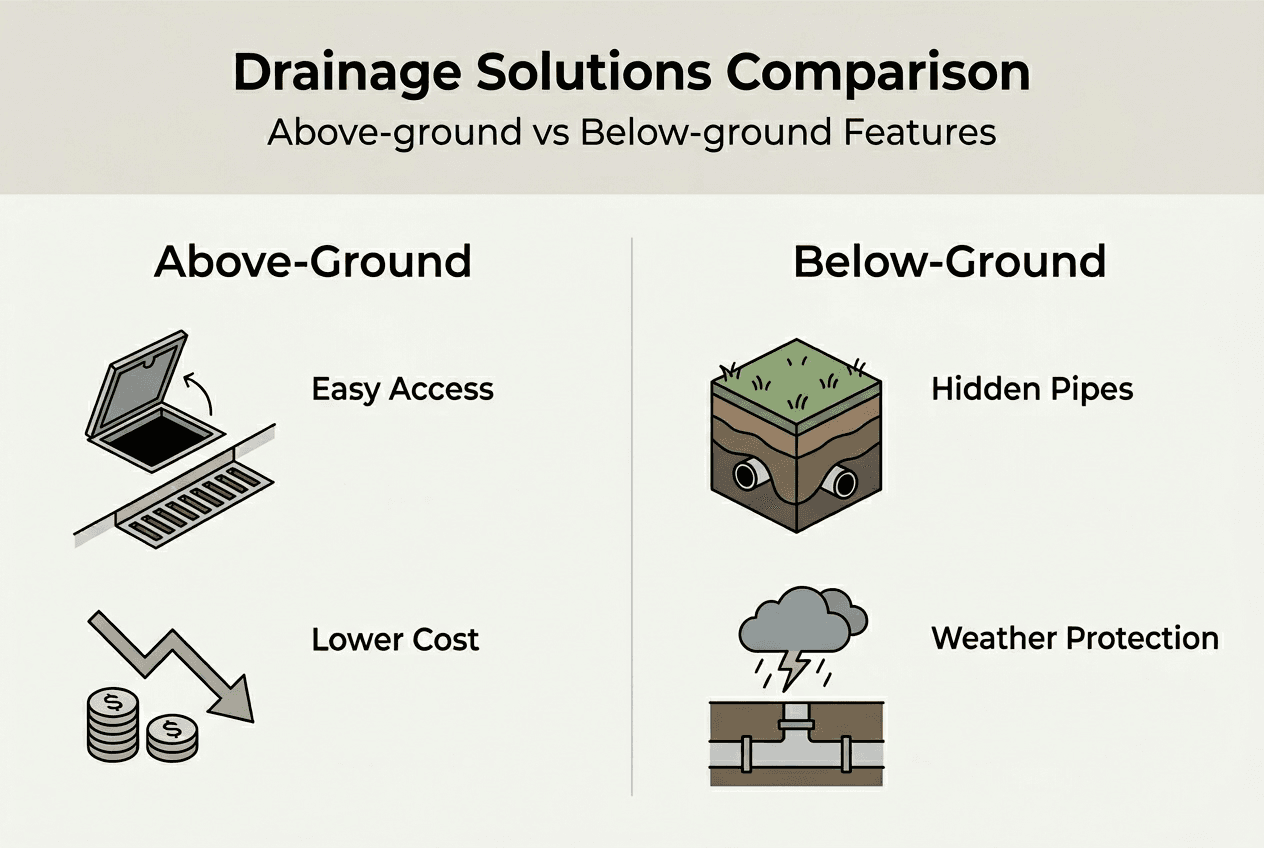
Below-ground systems provide aesthetic benefits and protection from physical damage, making them attractive for properties where visible pipework would detract from appearance or face vandalism risks. Portsmouth retail centres and hospitality venues often prefer underground drainage to maintain clean sightlines and professional presentation. These systems also resist freeze damage better during harsh winters, as soil provides natural insulation. However, installation requires significant excavation, and repairs become complex, expensive operations involving ground penetration and potential landscape restoration.
| Factor | Above-Ground | Below-Ground |
|---|---|---|
| Installation cost | Lower, no excavation | Higher, extensive digging |
| Maintenance access | Immediate, visual inspection | Requires excavation or cameras |
| Repair speed | Fast, minimal disruption | Slow, significant site impact |
| Aesthetic impact | Visible pipework | Hidden from view |
| Damage protection | Vulnerable to impacts | Protected by soil cover |
| Fault detection | Obvious leaks and blockages | Hidden until serious problems |
Site accessibility influences system choice significantly. Properties with limited space for excavation or concerns about disrupting underground utilities favour above-ground installations. Conversely, buildings with ample landscaped areas or strict aesthetic requirements lean toward below-ground solutions despite higher costs. Business operation continuity matters too, retail operations that cannot afford extended closures often choose above-ground systems for their installation speed and repair simplicity.
Pro Tip: Consider hybrid approaches using above-ground drainage for easily accessible areas whilst placing below-ground systems where aesthetics demand invisibility or physical protection becomes paramount.
Portsmouth’s coastal climate adds another consideration, with salt air potentially corroding exposed metal pipes faster than protected underground equivalents. Selecting corrosion-resistant materials for above-ground installations mitigates this concern whilst preserving the maintenance advantages. Tree root drainage issues affect below-ground systems more severely, as roots infiltrate joints seeking moisture, creating blockages that require expensive repairs.
UK regulations and maintenance essentials for commercial drainage
UK Building Regulations Part H and BS EN 12056 mandate specific design and installation standards for commercial drainage systems, ensuring public health protection and environmental safety. Part H covers foul water drainage, rainwater drainage, and wastewater treatment, establishing minimum pipe sizes, gradients, and materials. BS EN 12056 provides detailed technical specifications for gravity drainage systems, including calculation methods for determining adequate pipe diameters based on expected water volumes. Portsmouth businesses must comply with these regulations during new installations and major renovations, with Building Control inspections verifying adherence.
Regular maintenance forms the cornerstone of drainage system longevity and regulatory compliance. Neglected systems develop blockages that cause backups, flooding, and potential health hazards violating environmental regulations. Insurance policies often require documented maintenance records, with claims rejected if poor upkeep contributed to water damage. Establishing preventive maintenance schedules costs far less than emergency repairs and business interruption.
Essential maintenance tasks include:
- Quarterly gutter and downpipe cleaning removing leaves, debris, and sediment
- Bi-annual drain inspections using CCTV cameras identifying early-stage problems
- Annual system flushing clearing accumulated deposits before blockages form
- Immediate repairs of identified defects preventing minor issues escalating
- Documentation of all inspections and maintenance creating compliance records
Pro Tip: Schedule intensive drainage maintenance before autumn when falling leaves create peak blockage risks, and again before spring when heavy rainfall tests system capacity.
Portsmouth’s proximity to the sea introduces additional maintenance considerations. Salt spray accelerates corrosion of metal components, requiring more frequent inspections and earlier replacement of vulnerable parts. Coastal storms can overwhelm drainage systems with exceptional water volumes, making post-storm inspections essential for identifying damage before it causes failures. Properties near the waterfront should budget for enhanced maintenance programmes reflecting these elevated risks.
Professional drainage contractors provide specialist services including high-pressure jetting, root cutting, and structural repairs that exceed typical maintenance team capabilities. Establishing relationships with qualified providers ensures rapid response when problems arise. Commercial drainage regulations guide resources help property managers understand compliance requirements, whilst drainage failure prevention tips offer practical strategies for avoiding common pitfalls.
Maintenance routines should adapt to seasonal patterns, with increased attention during wet months when systems face maximum stress. Winter preparations include checking for ice damage risks and ensuring adequate flow prevents freezing in exposed pipes. Summer provides opportunities for thorough inspections and repairs without weather-related urgency. This cyclical approach maintains system reliability year-round whilst optimising maintenance resource allocation.
Protect your Portsmouth business with expert drainage services
Navigating commercial drainage challenges requires expertise that understands Portsmouth’s unique combination of coastal weather, varied soil conditions, and diverse building types. Professional drainage specialists assess your property’s specific needs, recommending solutions that balance performance, cost, and maintenance requirements. Whether you’re addressing existing drainage problems or planning new installations, expert guidance prevents costly mistakes and ensures regulatory compliance.
Local drainage professionals bring invaluable knowledge of Portsmouth’s infrastructure, building regulations, and common challenges affecting commercial properties throughout the area. They design systems accounting for your site’s topography, roof configuration, and operational requirements whilst ensuring installations meet UK standards. Regular servicing programmes keep drainage systems functioning optimally, preventing the emergency situations that disrupt business and drain budgets. Explore commercial drain solutions maintenance options tailored to your property, review commercial drainage system types suited to Portsmouth conditions, and connect with Portsmouth drainage services protecting commercial investments across the region.
Frequently asked questions
What are the most common causes of commercial drainage failure?
Blockages from accumulated debris, tree root infiltration, and inadequate maintenance top the list of drainage failures affecting Portsmouth businesses. Poor initial installation using incorrect pipe sizes or gradients creates chronic problems that worsen over time. Heavy rainfall overwhelming undersized systems designed for average conditions rather than peak volumes also causes frequent failures. Regular inspections and preventive maintenance catch these issues before they escalate into expensive emergencies.
How does a siphonic roof drainage system work for large buildings?
Siphonic systems use vacuum mechanisms drawing water at high speeds from extensive roof areas through relatively small diameter pipes. When rainfall fills the specially designed drain, air gets expelled creating negative pressure that pulls water rapidly through the system. This technology handles large water volumes efficiently without the bulky pipe networks traditional gravity systems require. Portsmouth’s larger commercial buildings benefit from reduced installation costs and faster water removal during heavy storms.
Why is regular maintenance crucial for commercial drainage systems?
Maintenance prevents blockages developing into flooding events that damage property, disrupt operations, and potentially violate environmental regulations. Regular inspections identify deteriorating components before failures occur, allowing scheduled repairs rather than emergency interventions. Documented maintenance supports insurance claims and demonstrates regulatory compliance during inspections. For Portsmouth businesses, consistent upkeep protects property values whilst minimising operational downtime from drainage-related problems.
What factors determine the choice between above-ground and below-ground drainage?
Maintenance accessibility, installation costs, and fault detection speed guide this decision alongside aesthetic considerations and site constraints. Above-ground systems offer easier maintenance and lower installation costs but remain visible and vulnerable to damage. Below-ground alternatives provide protection and cleaner appearance at higher installation and repair costs. Portsmouth businesses prioritising rapid maintenance access and installation speed favour above-ground solutions, whilst those emphasising aesthetics and long-term protection choose below-ground systems despite the trade-offs.