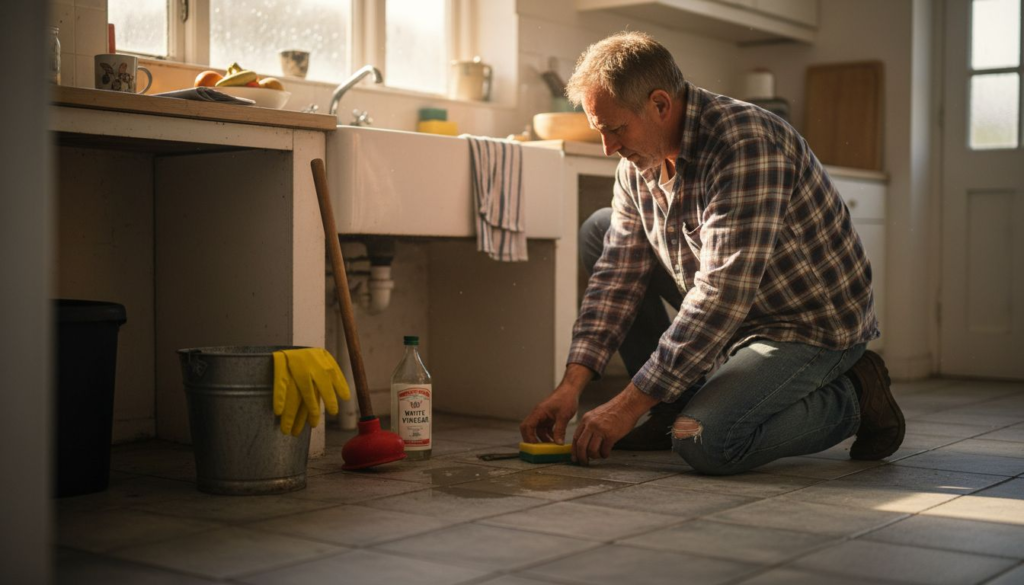
Blocked drains are all too common in Portsmouth homes, leading to unpleasant smells and costly repairs if ignored. Many property owners face the challenge of frequent blockages, making it tempting to try quick fixes instead of lasting solutions. By learning how to use proper protective gear and safe cleaning methods at home, you gain control over routine maintenance and prevent minor issues turning into big headaches.
Table of Contents
- Step 1: Gather Essential Drain Cleaning Tools And Supplies
- Step 2: Remove Visible Debris From Drains And Plugholes
- Step 3: Apply Safe Cleaning Solutions And Flush With Hot Water
- Step 4: Test Drainage And Inspect For Recurring Blockages
Quick Summary
| Key Insight | Explanation |
|---|---|
| 1. Assemble essential tools | Gather tools like a plunger, snake, gloves, and safety glasses for effective drain cleaning. |
| 2. Remove visible debris first | Clear hair, grease, and food particles before using chemical solutions to prevent deeper blockages. |
| 3. Use safe cleaning solutions | Opt for natural solutions like baking soda and vinegar to maintain pipe integrity and environmental safety. |
| 4. Test drainage effectiveness | Run water to check if your cleaning improved flow; this helps identify deeper issues requiring attention. |
| 5. Log recurring blockages | Keep a record of clogs to identify patterns; this information aids professionals in diagnosing persistent problems. |
Step 1: Gather essential drain cleaning tools and supplies
Before you start cleaning your drains, you’ll need the right tools and protective gear. Having everything ready prevents frustration and keeps you safe whilst working. This step ensures you’re properly equipped to tackle blockages effectively.
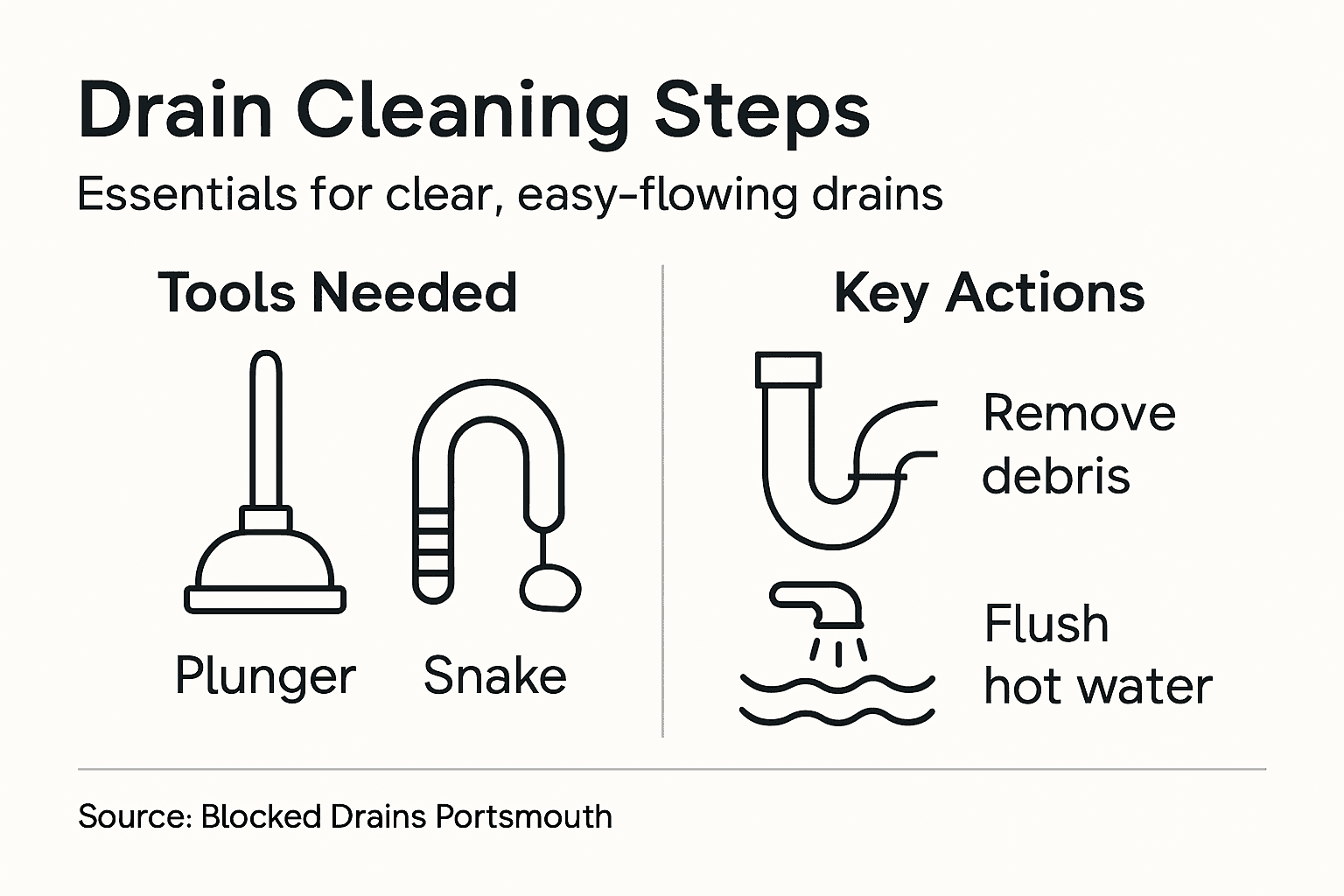
Start by assembling your basic toolkit. You’ll need a plunger (a cup-style one works best for sinks and showers), a plumbing snake or auger for deeper blockages, and a bucket to catch water. A pair of rubber gloves is non-negotiable, as you’ll be handling potentially unpleasant debris and cleaning solutions. Eye protection is equally important when dealing with chemical cleaners, so grab a pair of safety glasses or goggles.
When selecting cleaning solutions, avoid harsh chemicals that could damage your pipes or harm the environment. Neutral pH solutions are safer for your drainage system and your hands. Stock up on these essentials:
- Rubber gloves (thick ones offer better protection)
- Safety glasses or goggles
- A suitable plunger for your drain type
- A plumbing snake or drain auger
- Baking soda and white vinegar (natural alternatives)
- Enzymatic drain cleaner (gentler than chemical options)
- Bucket or basin for water collection
- Wire drain brush or plumbing brush
- Flashlight or headlamp to see inside pipes
- Old towels for cleanup and spill protection
For Portsmouth homeowners with recurring drain issues, having these tools on hand means you can address minor blockages before they become expensive problems. Consider storing your supplies in a labelled container under the sink or in a utility cupboard for quick access when needed.
When handling any cleaning agents, wearing appropriate protective equipment prevents skin contact and eye irritation. Always read product labels and follow safety instructions. After finishing your cleaning work, ensure you flush your drains thoroughly with plenty of water, which prevents residue buildup and maintains system safety.
Having a torch nearby helps you spot blockages and understand what you’re dealing with before you start. Many DIY drain problems become simpler once you can actually see what’s causing the issue.
Pro tip: Keep a basic drain cleaning kit permanently assembled and stored in your home so you can tackle minor blockages immediately rather than waiting for them to worsen or booking an expensive service call.
Step 2: Remove visible debris from drains and plugholes
This step focuses on physically clearing away the debris you can actually see. Removing hair, grease buildup, and food particles prevents blockages from forming deeper in your pipes. Start by putting on your gloves and safety glasses before you begin.
Begin at the drain opening itself. Look inside using your torch to see what’s there. You’ll often spot a layer of hair, soap residue, or other visible material clinging to the drain walls. Carefully reach in with your fingers or a small wire brush and pull out anything you can grasp. Don’t force anything; if it won’t come free easily, leave it for the next step.
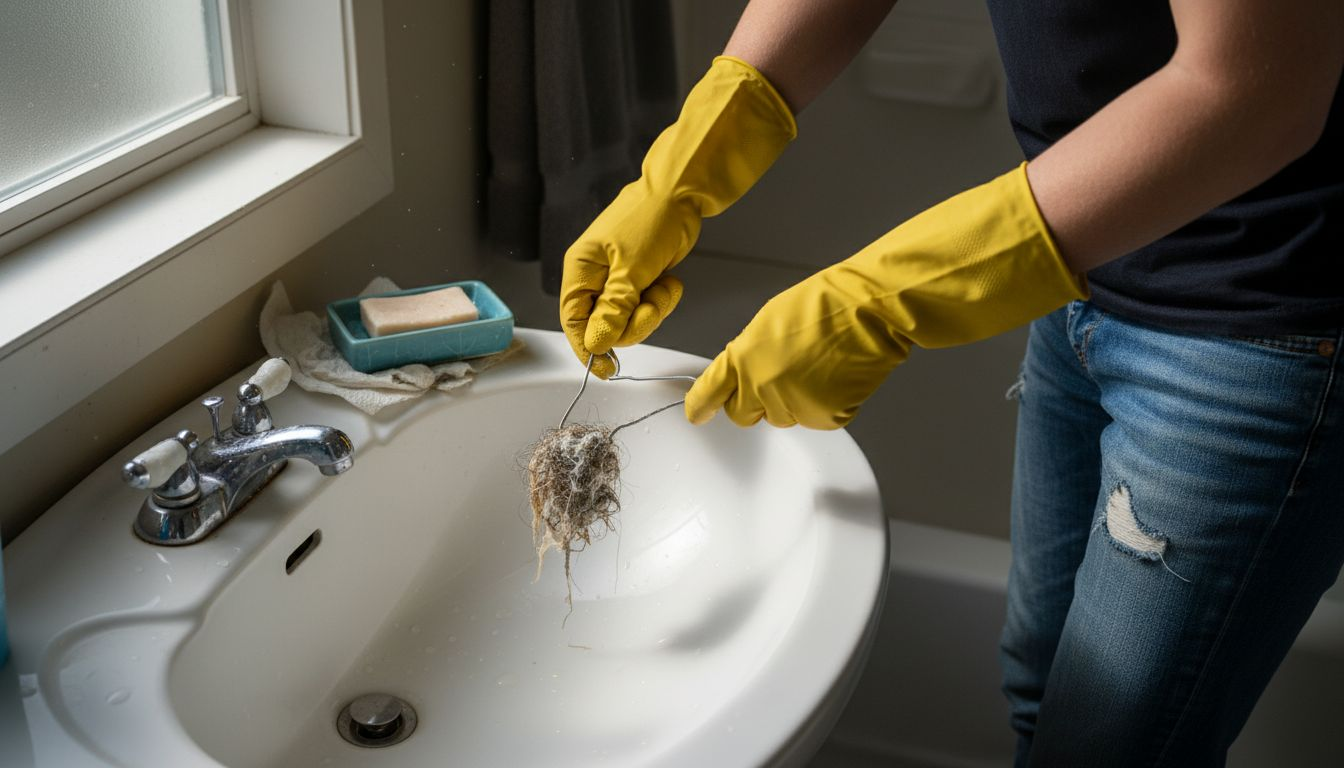
For sink plugholes, remove the plug or strainer basket if possible. Common causes of drain clogs include grease, food solids, and accumulated hair that collect at the drain opening. Empty the basket into a bin and rinse it thoroughly. Wipe down the sides of the plughole opening with an old cloth to remove sticky residue.
Follow this simple sequence when clearing visible debris:
- Put on your gloves and grab your torch
- Look inside the drain to identify visible blockages
- Carefully remove hair, soap scum, and debris by hand or with a brush
- Extract the drain strainer or plug basket if accessible
- Empty the basket and rinse it clean
- Wipe the drain opening with an old cloth
- Dispose of all collected debris in your bin
After clearing the visible material, pour some water down the drain to see how freely it flows. If water drains quickly, you’ve solved a minor blockage. If it still moves slowly, you’ll move on to using chemical or mechanical solutions.
Installing drain strainers in your sinks and showers catches hair and debris before they enter your pipes, saving you from future blockages.
This preventative approach means you’ll spend less time on maintenance overall. Removing visible debris is genuinely the easiest step, yet it resolves many DIY drain issues.
Pro tip: Keep a small bin lined with a disposable bag right beside your drain whilst clearing debris; this makes cleanup quicker and prevents debris from accidentally falling back down the drain.
Step 3: Apply safe cleaning solutions and flush with hot water
Now you’ll use a cleaning solution to dissolve stubborn buildup and flush away remaining debris. The right approach combines an effective cleaning agent with thorough flushing to restore proper drainage. This step transforms your drain from sluggish to flowing freely.
Choose your cleaning solution carefully. Natural options like baking soda and white vinegar work brilliantly for routine maintenance and cause no damage to pipes or the environment. Simply pour half a cup of baking soda down the drain, followed by half a cup of white vinegar. The chemical reaction creates fizzing action that breaks up debris without harsh chemicals.
If you prefer a commercial product, select safer cleaning products with EPA approval or Green Seal certification that effectively clean whilst minimising harmful exposure. Follow the product instructions exactly. Most commercial drain cleaners need time to work, typically between 15 and 30 minutes before flushing.
After your chosen solution has had time to work, flush thoroughly with hot water. This is absolutely critical. Run hot water for at least two minutes to ensure the cleaning solution is diluted and completely removed from your pipes. The flushing step prevents chemical buildup and maintains pipe integrity.
Here’s a quick comparison of drain cleaning solution types and their effects:
| Cleaning Solution Type | Effectiveness | Impact on Pipes | Environmental Friendliness |
|---|---|---|---|
| Baking soda & vinegar | Moderate | Safe | Very high |
| Enzymatic cleaners | Moderate | Safe | High |
| Chemical drain cleaners | High | Potentially damaging | Low |
| Boiling water (alone) | Low | Safe | Very high |
Here’s the process in sequence:
- Select your cleaning solution (baking soda and vinegar or approved commercial product)
- Pour or apply the solution into the drain
- Wait the recommended time (usually 15-30 minutes)
- Boil a kettle and prepare hot water
- Slowly pour hot water down the drain
- Continue flushing for at least two minutes
- Test drainage by running water to see the improvement
The heat from hot water helps dissolve remaining grease and residue whilst carrying debris away. Your drain should now run noticeably faster. If water still drains slowly, you may need mechanical tools like a plumbing snake.
Always flush thoroughly after applying any cleaning solution to prevent residue buildup and protect your pipes from damage.
Pro tip: On a weekly basis, pour boiling water down your drains followed by half a cup of baking soda and vinegar, then another round of hot water; this simple routine prevents most blockages from forming in the first place.
Step 4: Test drainage and inspect for recurring blockages
This step confirms your cleaning worked and identifies whether blockages keep returning. Testing drainage reveals the effectiveness of your work and helps you spot patterns that indicate deeper problems. You’ll gain clarity on whether routine maintenance is enough or professional help is needed.
Start by running water from your kitchen tap directly into the drain you just cleaned. Watch how quickly the water disappears. It should drain smoothly without pooling or backing up. If water vanishes rapidly, your cleaning was successful. If it still moves sluggishly or pools around the drain, you have a more stubborn blockage requiring additional attention.
Repeat this test with your shower and bathroom sink drains. Each drain in your home can behave differently depending on what flows through it. Your kitchen sink handles grease, whilst bathroom drains collect hair and soap residue, so they may require different approaches.
Inspect for patterns over the following weeks. Testing drainage by observing water flow and monitoring over time helps identify recurring blockages that suggest a deeper issue. If the same drain clogs again within two weeks, something more serious is happening beneath the surface.
Use this checklist to assess your drainage:
- Water drains completely within 5-10 seconds (excellent)
- Water drains slowly but eventually clears (moderate success)
- Water pools around the drain (blockage remains)
- Gurgling sounds occur when draining (air trapped in pipes)
- Unpleasant odours emerge (bacterial buildup or deeper blockage)
- One drain blocks repeatedly whilst others work fine (localised problem)
If you notice water backing up into other drains when one drains, or if the same drain clogs repeatedly, you likely have a blockage deeper in your main drain line. This situation calls for professional intervention rather than repeated DIY attempts.
This summary helps you identify which drainage issue may require attention:
| Drainage Symptom | Likely Cause | Recommended Action |
|---|---|---|
| Water drains rapidly | Blockage cleared | Routine monthly check |
| Water drains slowly | Partial blockage remains | Further cleaning or snaking |
| Water pools or backs up | Serious blockage persists | Professional assessment |
| Odours or gurgling | Bacterial build-up or trapped air | Inspect and clean trap |
Regular testing prevents problems from escalating into expensive repairs. Most Portsmouth homeowners find that monthly drain testing catches issues early before they cause damage.
Recurring blockages in the same drain within weeks indicate a problem beyond routine debris and suggest professional assessment may be necessary.
Pro tip: Keep a simple log of which drains clog and when; patterns revealing which drains block seasonally or after heavy rainfall help plumbers diagnose underlying causes more quickly and accurately.
Keep Your Drains Flowing Smoothly with Expert Help in Portsmouth
Dealing with slow or recurring blockages can be frustrating and sometimes worrying as it may signal a deeper drainage issue beneath the surface. This guide highlights the common challenges of DIY drain cleaning such as removing visible debris safely, using appropriate cleaning solutions, and testing drainage efficiency. However, persistent problems like repeated blockages, foul odours, or water pooling require expert attention to prevent costly damage and maintain a healthy home.

For Portsmouth homeowners looking to protect their property and avoid ongoing plumbing headaches, our team at Blocked Drains Portsmouth specialises in fast and reliable drain unblocking services. We provide thorough inspections and professional solutions beyond routine cleaning to fix stubborn or hidden blockages. Don’t wait until a minor clog turns into a major inconvenience. Take the proactive step now by visiting Blocked Drains Portsmouth or learn more about our trusted Drain Unblocking Services designed for your specific needs.
Frequently Asked Questions
What tools do I need for routine drain cleaning?
Before starting, gather essential tools like a plunger, plumbing snake, bucket, rubber gloves, safety glasses, and natural cleaning solutions such as baking soda and vinegar. Assemble these items to efficiently tackle any minor blockages and ensure you have everything ready when needed.
How can I clear visible debris from my drains effectively?
To clear visible debris, wear your gloves and safety glasses, then use a torch to inspect the drain. Remove hair, soap residue, and any other debris by hand or with a small wire brush, ensuring to dispose of it properly after cleaning.
What natural cleaning solutions can I use for my drains?
You can use a mixture of baking soda and white vinegar as a natural cleaning solution for your drains. Pour half a cup of baking soda followed by half a cup of vinegar down the drain, wait for a fizzing reaction to break up debris, and then flush with hot water for optimal results.
How can I test if my drains are flowing properly after cleaning?
Run water down the cleaned drain and observe if it disappears quickly without pooling. If water drains smoothly, your cleaning was effective, but if it still moves slowly, consider additional cleaning or mechanical solutions, like a plumbing snake.
What should I do if my drains keep clogging after routine cleaning?
If you notice recurring blockages, it may indicate a more serious issue deeper in your plumbing system. Document when specific drains clog, and consult a professional to assess and address the underlying cause effectively.
How often should I perform routine drain cleaning to prevent blockages?
Aim to perform routine drain cleaning monthly to prevent major clogs. This frequency can help maintain clear drains and significantly reduce the risk of costly repairs due to persistent blockages.