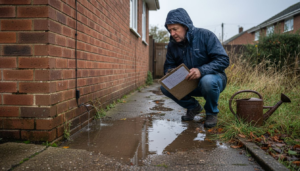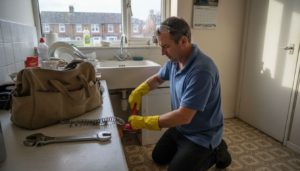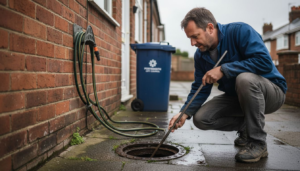
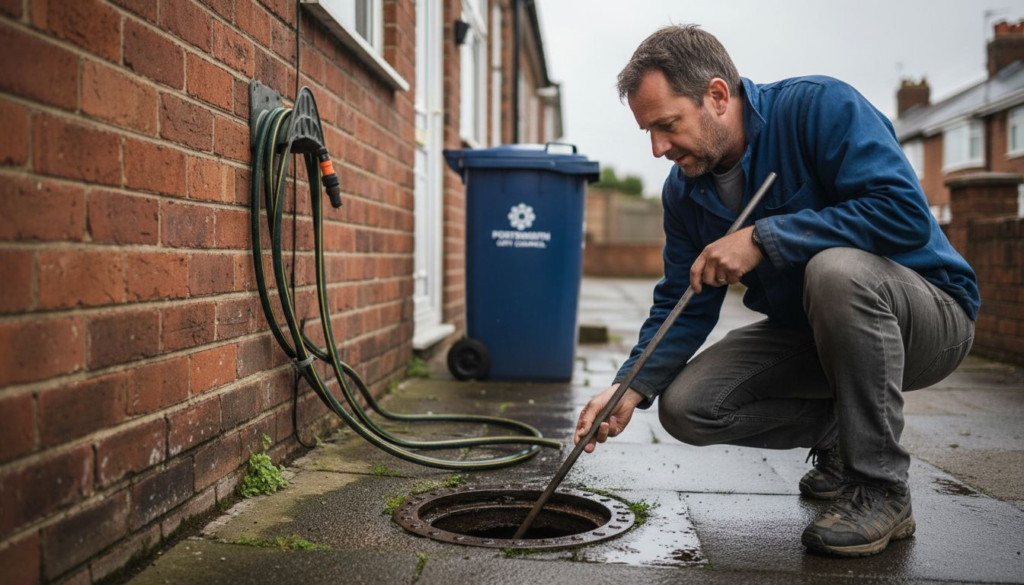
Blocked drains can turn an ordinary day in Portsmouth into a major headache, especially when water begins to back up and threaten your home. Fast action is vital, as wastewater management issues may lead to expensive property damage and health concerns if left unchecked. Whether your blockage is caused by food waste, hair, or unflushable items, this guide will help you understand the inner workings of your drainage system and introduce practical DIY methods before you consider calling a professional.
Table of Contents
- Drain Unblocking Explained For Homeowners
- Common Types Of Drain Blockages In Portsmouth
- DIY Drain Unblocking Methods And Tools
- Risks And Safety Concerns For DIY Solutions
- When To Call A Drainage Professional
Key Takeaways
| Point | Details |
|---|---|
| Understanding Drainage Importance | Home drainage systems are essential for wastewater management; blockages can lead to significant property damage. |
| Common Blockage Sources | Portsmouth homeowners often face blockages from food waste, hair, non-biodegradable items, and tree roots. |
| Proactive Maintenance Tips | Regular inspections and using protective devices like backwater check valves help prevent sewage backups. |
| When to Seek Professional Help | Persistent blockages, flooding, or structural damage should prompt homeowners to consult a drainage expert. |
Drain unblocking explained for homeowners
Drain unblocking is a critical aspect of home maintenance that every Portsmouth homeowner should understand. When drainage systems become clogged, they can cause significant disruption and potential damage to your property. Wastewater management involves complex pipe networks designed to transport water safely away from your home, but blockages can quickly compromise this essential system.
Understanding how home drainage systems function is crucial. Drain waste and venting principles reveal that residential drainage pipes are engineered with specific design features to prevent sewage backflow and maintain consistent water movement. These systems typically include:
- Primary drainage pipes that connect household fixtures
- Ventilation pipes that prevent pressure buildup
- Clean-out points for accessing and clearing potential blockages
- Slope angles that facilitate natural water flow
Homeowners in Portsmouth face unique drainage challenges due to the city’s coastal environment and older housing stock. Blockages can occur from various sources, including:
- Accumulated food waste in kitchen sinks
- Hair and soap residue in bathroom drains
- Tree root intrusions in underground pipes
- Mineral buildup from hard water
Preventing sewage backups requires proactive maintenance. Preventing home sewage backflow involves understanding potential entry points and installing protective mechanisms like backwater check valves. These devices permit one-way sewage flow, significantly reducing the risk of contamination during extreme weather or municipal sewer system challenges.
Pro tip: Invest in regular drain inspections and maintain a log of your home’s drainage maintenance to catch potential issues before they escalate.
Common types of drain blockages in Portsmouth
Portsmouth homeowners encounter a diverse range of drain blockage challenges that can significantly disrupt household plumbing systems. Understanding these common issues is crucial for effective maintenance and prevention. Unflushable waste causes represent a significant problem in urban drainage networks, particularly in older residential areas.
The most prevalent types of drain blockages in Portsmouth include:
- Kitchen sink blockages from accumulated food waste and grease
- Bathroom drain obstructions caused by hair and soap residue
- Toilet system blockages from non-biodegradable materials
- External pipe intrusions from tree roots and sediment buildup
Specifically, urban drainage systems in Portsmouth face unique challenges. Unflushable materials like wet wipes, sanitary products, and other non-biodegradable waste frequently combine with cooking oils to create substantial blockages. These accumulations, known as fatbergs, can cause severe sewer overflows and environmental complications.
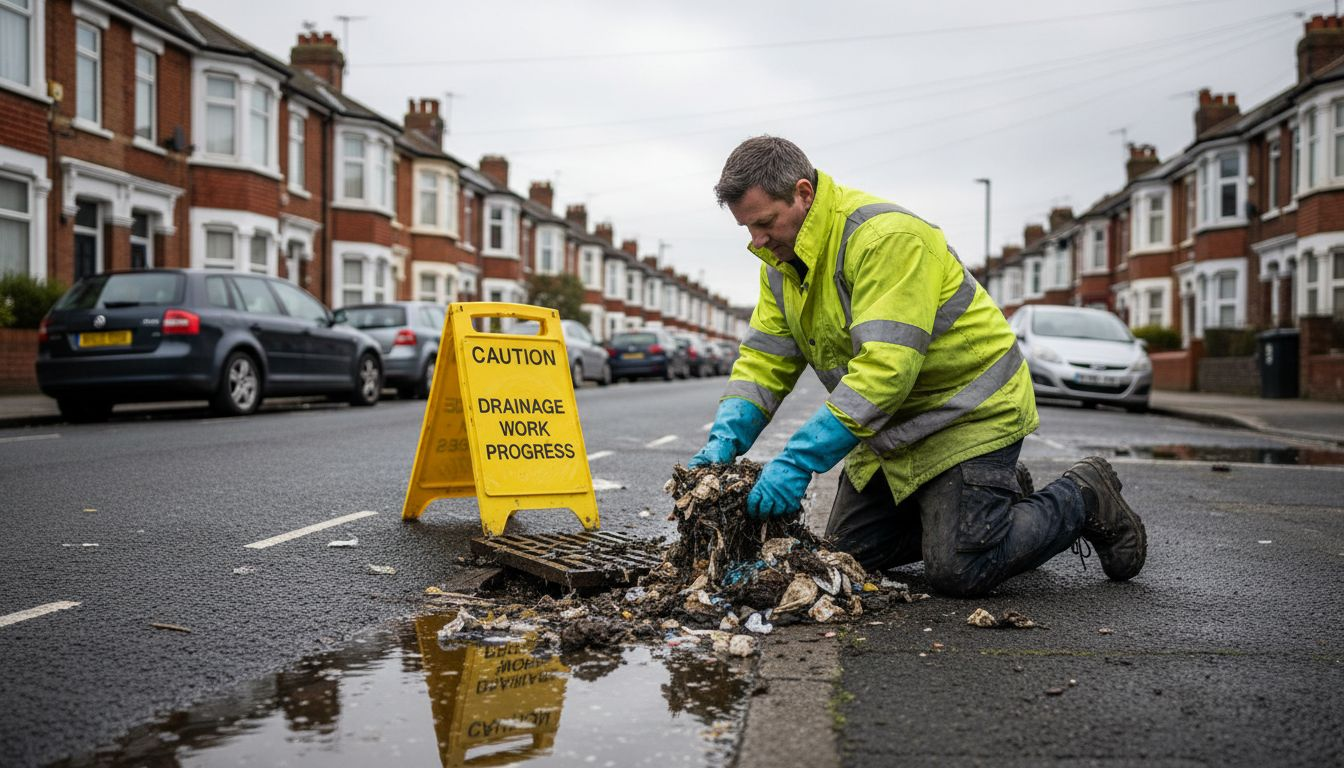
Drain blockages pose significant health and property risks. Sewage backflow prevention highlights the potential for pathogen transmission and structural damage when drainage systems become compromised. Sediment accumulation, grease buildup, and debris intrusion can lead to expensive repairs and potential health hazards.
Here is a summary comparing common sources of drain blockages in Portsmouth and their consequences:
| Blockage Source | Typical Location | Common Consequence |
|---|---|---|
| Food waste & grease | Kitchen sinks | Pipe narrowing and slow drainage |
| Hair and soap residue | Bathroom drains | Water pooling and odours |
| Non-biodegradable waste | Toilets | Toilet overflow and backflow |
| Tree roots & sediment | Underground pipes | Pipe fractures and flooding risk |
Pro tip: Implement a strict household policy of disposing of only biodegradable materials in drainage systems to minimise blockage risks.
DIY drain unblocking methods and tools
Portsmouth homeowners can tackle many drainage issues with the right approach and tools. Drain waste management techniques reveal several effective strategies for addressing minor blockages before calling a professional.
Essential DIY drain unblocking tools include:
- Plunger for creating suction and dislodging soft blockages
- Drain snake/auger for reaching deeper pipe obstructions
- Chemical drain cleaner as a last resort for stubborn clogs
- Pipe wrench for accessing and manipulating drain components
- Protective gloves to maintain hygiene during cleaning
The most effective DIY unblocking methods typically follow a progressive approach. Start with manual techniques like plunging, which can resolve many minor blockages without harsh chemicals. Mechanical interventions such as drain snakes allow deeper access into pipe systems, enabling removal of more stubborn debris without causing potential pipe damage.
Community-focused approaches can also prevent drainage issues. Drain maintenance strategies emphasise regular debris removal and proactive cleaning to maintain optimal drainage function. Simple manual tools like gloves and litter pickers can help keep external drainage points clear, reducing the likelihood of significant blockages.
Pro tip: Always have a bucket of hot water and washing-up liquid ready as a first-line intervention for minor kitchen sink blockages.
Risks and safety concerns for DIY solutions
While DIY drain unblocking can seem straightforward, Portsmouth homeowners must understand the potential risks and complications. Sediment clogging risks demonstrate how improper interventions can significantly worsen drainage problems rather than resolve them.
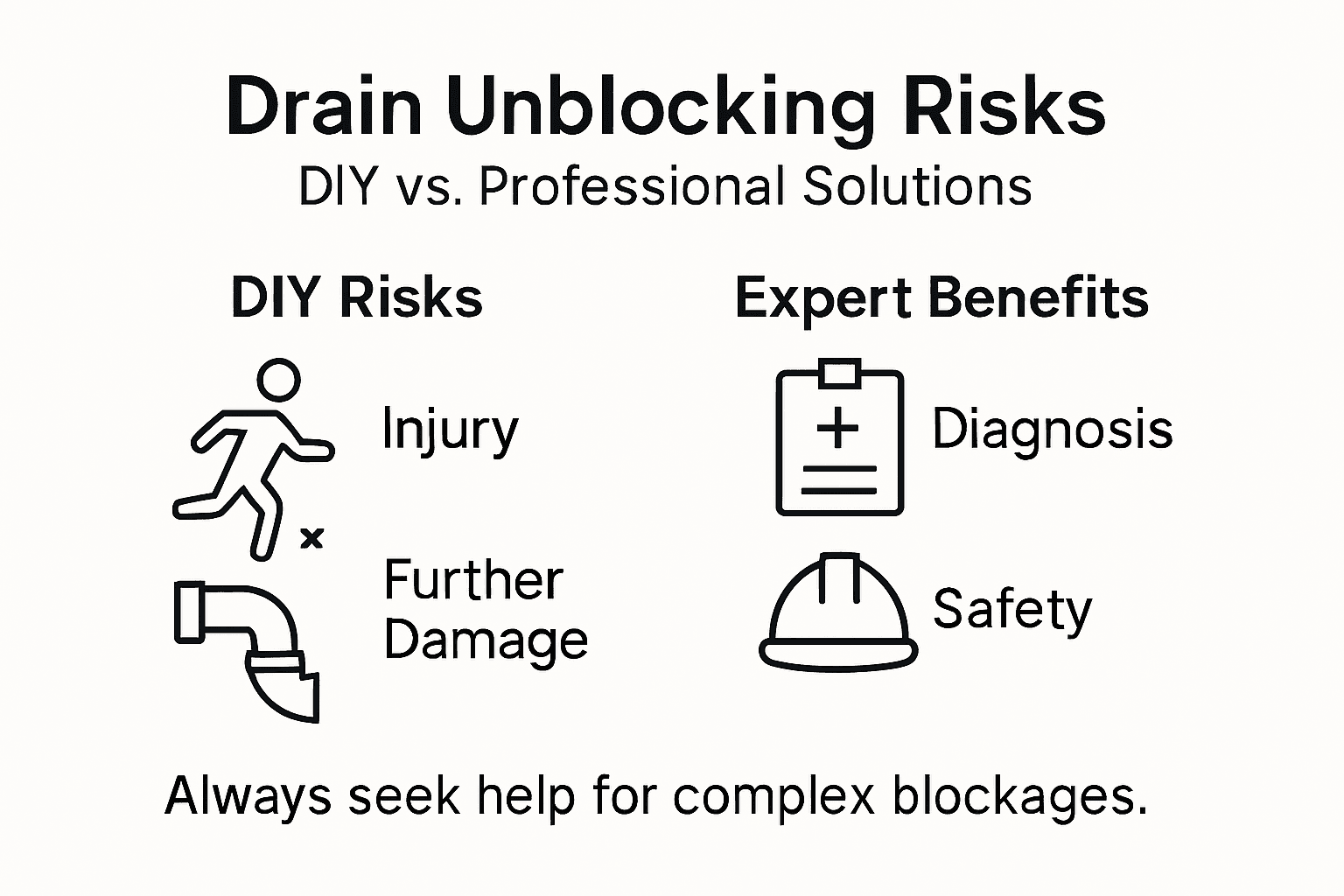
Key safety concerns for DIY drain maintenance include:
- Chemical damage to pipes from inappropriate cleaning solutions
- Potential personal injury from incorrect tool usage
- Cross-contamination risks during waste removal
- Structural pipe damage from excessive force or incorrect techniques
- Health hazards from exposure to sewage materials
Professional drainage experts warn that amateur attempts can create more severe problems than the original blockage. Incorrect tool selection or aggressive cleaning methods may cause microscopic pipe damage, leading to future leaks or complete system failure. Mechanical interventions require specific knowledge to prevent unintended consequences.
Drain trap protection is another critical safety consideration often overlooked by DIY enthusiasts. Drain traps serve as crucial barriers preventing sewer gases from entering living spaces. Improper maintenance can compromise these protective mechanisms, potentially exposing residents to harmful gases and unpleasant odours.
Pro tip: When in doubt about a drainage issue, consult a professional to prevent costly mistakes and potential health risks.
When to call a drainage professional
Portsmouth homeowners must recognise the critical moments when DIY solutions become insufficient and professional intervention becomes essential. Urban drainage complexity demonstrates that many drainage challenges require specialised expertise beyond typical household maintenance skills.
Critical scenarios necessitating professional drainage support include:
- Persistent flooding in specific areas of your property
- Recurring blockages that resist multiple DIY attempts
- Structural drainage system damage
- Underground pipe network complications
- Significant soil saturation around drainage areas
- Unusual sewage odours or backflow issues
Professional drainage experts bring comprehensive diagnostic capabilities that extend far beyond simple unblocking techniques. Drainage system assessment involves intricate evaluations of potential regulatory compliance, environmental impact, and long-term infrastructure integrity. Technical expertise allows professionals to identify underlying issues that might remain invisible to untrained homeowners.
Moreover, drainage professionals can prevent potential legal and environmental complications. Incorrect drainage interventions might inadvertently create problems for neighboring properties or violate local water management regulations. Their specialised knowledge ensures that drainage solutions are not just effective, but also legally and environmentally responsible.
Pro tip: Maintain a detailed log of drainage issues to provide comprehensive information when consulting a professional drainage expert.
The table below contrasts DIY and professional drain unblocking approaches for Portsmouth homes:
| Aspect | DIY Approach | Professional Solution |
|---|---|---|
| Typical Tools | Plungers, drain snakes, cleaners | CCTV inspection, hydro-jetting, repairs |
| Skill Required | Basic household knowledge | Specialist technical expertise |
| Risk Level | Moderate to high (if mishandled) | Low for homeowner, managed by expert |
| When Appropriate | Minor or superficial blockages | Persistent or complex drainage issues |
Expert Drain Unblocking Services for Portsmouth Homes
Dealing with persistent drain blockages or worrying about sewage backflow in your Portsmouth home can be stressful. The article highlights key challenges like hair and soap residue, tree root intrusion, and non-biodegradable waste causing serious drainage issues. If you want to avoid costly damage and health risks from blocked drains it is vital to trust professionals who understand the complexity of local drainage systems.
At Blocked Drain Portsmouth we specialise in effective drain unblocking tailored for Portsmouth properties. Our expert team uses advanced techniques to diagnose and clear blockages quickly while protecting your home’s drainage integrity. Discover how we can safeguard your home by exploring our professional drain unblocking solutions and learn about our commitment to maintaining clean and safe drainage systems. Do not wait until small issues turn into large problems contact us today to secure your home against drainage emergencies.
Frequently Asked Questions
What are the common causes of drain blockages?
Common causes of drain blockages include accumulated food waste and grease in kitchen sinks, hair and soap residue in bathroom drains, non-biodegradable waste in toilets, and the intrusion of tree roots into underground pipes.
How can I prevent drain blockages in my home?
Preventing drain blockages involves disposing of only biodegradable materials in sinks and toilets, routinely cleaning drain covers, and scheduling regular maintenance checks to assess the condition of your drainage system.
When should I attempt to unblock a drain myself, and when should I call a professional?
You can attempt to unblock minor drainage issues using basic tools like plungers and drain snakes. However, if you experience persistent flooding, recurring blockages, or unusual sewage odours, it is advisable to call a professional.
What DIY methods can I use for unblocking drains?
Effective DIY methods for unblocking drains include using a plunger to create suction, employing a drain snake to remove deeper obstructions, and, as a last resort, using chemical drain cleaners. Always take precautions to maintain safety and hygiene.